Going green isn’t just good for the Earth; it’s good for you too! If you’re a homeowner in Sierra Vista, or Arizona, a few simple shifts in how you live can make your home more sustainable while also saving you money. By cutting down on waste, getting creative with reusing items, and stepping up your recycling game, you’ll be enjoying the benefits of an eco-friendly lifestyle in no time.
Reducing Waste
The first step in living a more sustainable lifestyle is to reduce the amount of waste you produce. Here are a few tips to get you started:
Buy in bulk
Purchasing items like food, cleaning supplies, and personal care products in larger quantities can reduce packaging waste. Just be sure to store your bulk items properly to maintain their freshness.
Choose products with less packaging
When shopping, opt for products with minimal or biodegradable packaging. For example, select items sold in bulk bins and bring your own reusable containers.
Avoid single-use items
Refuse single-use plastics like straws, bags, and water bottles. Instead, use reusable alternatives made of stainless steel, cloth, or glass.
Reusing Items Creatively
Before throwing something away, consider if it can be reused. Here are a few creative ways to give old items new life:
Turn old jars into planters
Clean and decorate glass jars to create adorable planters for small plants and herbs.
Use rags instead of paper towels
Cut up old t-shirts and towels to create reusable rags for cleaning and wiping up spills.
Repurpose cardboard boxes
Use sturdy boxes to store items in your garage or attic or transform them into fun craft projects with the kids.
Recycling Effectively
Recycling is an easy way to divert waste from landfills and conserve natural resources. Here’s how to recycle more effectively:
Know what can be recycled
Check with your local recycling program to learn what materials are accepted. Common items include paper, plastic bottles, cans, and glass.
Rinse and sort properly
Clean food and liquid residue from items and sort them by material type. Remove lids, labels, and caps as required.
Participate in special collections
Many communities offer special collections for electronics, batteries, and hazardous waste. Participate in these programs to ensure these items are disposed of responsibly.
Benefits of a Sustainable Lifestyle
By reducing, reusing, and recycling, you can enjoy numerous benefits, including:
Conserving natural resources
Recycling helps to extract and process fewer raw materials from the earth.
Reducing landfill waste
By reusing and recycling items, you can divert waste from overflowing landfills.
Lowering your carbon footprint
Producing new items requires energy, so by reusing and recycling, you can reduce greenhouse gas emissions.
Saving money
Buying in bulk, reusing items, and recycling can save you money in the long run.
Partner with Team Derrick Coates
As you start on your journey to a more sustainable lifestyle, consider partnering with Team Derrick Coates, your local real estate experts. We can help you find a home in Arizona that meets your eco-friendly needs and budget. With their knowledge of the Arizona real estate market, we’ll guide you through the buying process, ensuring a smooth and stress-free transaction.
Frequently Asked Questions
Q: What are some easy ways to reduce waste at home?
A: Start by buying in bulk, choosing products with less packaging, and avoiding single-use items. Also, compost food scraps and yard waste to reduce your trash output.
Q: How can I creatively reuse old items?
A: Get creative and turn old jars into planters, use rags instead of paper towels, and repurpose cardboard boxes for storage or craft projects.
Q: What are some common items that can be recycled?
A: Check with your local program, but most accept paper, plastic bottles, cans, and glass. Be sure to rinse and sort items properly.
Q: How can Team Derrick Coates help me?
A: As your real estate agents, we can find you a home that supports your sustainable lifestyle. We’ll navigate the buying process, ensuring a smooth and successful transaction.
By implementing these reduce, reuse, recycle tips, you can make a positive impact on the environment and create a more sustainable home. Remember, every small change adds up to making a big difference. Start your eco-friendly journey today and enjoy the many benefits of a greener lifestyle. If you’re looking to buy or sell a home in Arizona that supports your sustainable needs, contact Team Derrick Coates, your local real estate experts. We’ll guide you through the process, ensuring a smooth and successful transaction.
Moving into a new home is an exciting milestone, especially in a vibrant real estate market like Arizona’s. Whether you’ve purchased a cozy bungalow in Sierra Vista or a modern desert oasis elsewhere in the state, the process of settling in and personalizing your space is key to making it truly feel like home. Here are some tips and ideas to help you transform your new house into your dream home.
Decorating and Furnishing Your New Home
Start with a Plan
Before diving into decorating, take some time to plan. Consider the style you want to achieve and how each room will be used. Create a mood board with colors, textures, and furniture styles that inspire you.
Choose a Color Palette
Selecting a cohesive color palette can create a harmonious flow throughout your home. Neutral colors like beige, gray, and white are versatile and can be accented with bold colors through accessories like pillows, rugs, and artwork.
Invest in Key Furniture Pieces
Focus on purchasing key pieces of furniture that are both functional and stylish. A comfortable sofa, a sturdy dining table, and a quality bed are essential. For homes in Sierra Vista, consider furniture that complements the southwestern style prevalent in the area.
Add Personal Touches
Incorporate personal items such as family photos, heirlooms, and travel souvenirs into your decor. These items add character and tell your unique story.
Mix Textures and Materials
Combining different textures and materials can add depth and interest to your interiors. Mix metals, woods, and fabrics to create a rich, layered look.
Landscaping and Outdoor Living Spaces
Plan Your Landscaping
Arizona’s climate is perfect for a variety of outdoor plants. Consult with a local real estate agent like Derrick Coates in Sierra Vista to get recommendations on native plants that thrive in the area. Xeriscaping, which uses drought-resistant plants, is a popular and environmentally friendly choice.
Create Outdoor Living Areas
Make the most of Arizona’s beautiful weather by creating comfortable outdoor living spaces. Invest in quality outdoor furniture, shade structures, and lighting to create a space where you can relax and entertain.
Add Personal Touches to Your Yard
Incorporate personal elements into your landscaping, such as a custom-built fire pit, a water feature, or a vegetable garden. These touches not only enhance your yard’s aesthetics but also make it more enjoyable.
Interior and Exterior Maintenance Tips
Regular Cleaning
Establish a regular cleaning routine to keep your home looking its best. Pay special attention to high-traffic areas and make sure to clean air filters regularly to maintain good air quality.
Seasonal Maintenance
Perform seasonal maintenance checks on your home. In Arizona, this might include inspecting your roof and gutters before monsoon season, servicing your HVAC system before the summer heat, and checking for any pest issues that can arise in warmer climates.
Upgrade Your Home Over Time
Don’t feel pressured to do everything at once. Focus on one project at a time and gradually upgrade your home. This approach is more manageable and allows you to make thoughtful decisions about your improvements.
FAQ
Q: How do I find a good real estate agent in Sierra Vista, Arizona?
A: Look for agents with strong local knowledge, good reviews, and a proven track record. Recommendations from friends and family can also be valuable.
Q: What are some popular interior design styles in Arizona?
A: Southwestern, modern desert, and rustic are popular styles. These often incorporate natural materials, earthy colors, and elements that reflect the local landscape.
Q: How can I make my home more energy-efficient in Arizona?
A: Install energy-efficient windows, use ceiling fans to reduce the need for air conditioning, and consider solar panels. Landscaping with shade trees can also help keep your home cooler.
Q: What are some low-maintenance landscaping options for Arizona?
A: Xeriscaping with native plants like succulents, cacti, and desert wildflowers is a low-maintenance option. Gravel and stone features can also reduce the need for watering and upkeep.
Q: How can I personalize my home without spending a lot of money?
A: Focus on DIY projects, such as painting, rearranging furniture, and making your own decor. Thrift stores and online marketplaces can also offer affordable finds.
Settling into your new home in Arizona is an exciting opportunity to create a space that reflects your personality and lifestyle. With careful planning and a bit of creativity, you can turn your house into a home that you’ll love for years to come. If you need assistance or advice, don’t hesitate to reach out to Team Derrick Coates who can provide local insights and support.
Owning a home is a significant milestone and a substantial investment. Whether you’re a first-time homeowner or a seasoned property owner, ensuring that your investment is protected is crucial. This is where homeowners insurance comes into play. For those involved in real estate in Arizona, particularly if you’re working with a real estate agent in Sierra Vista, understanding homeowners insurance is essential for safeguarding your property and maintaining peace of mind.
Why Homeowners Insurance is Important
Homeowners insurance is a type of property insurance that covers losses and damage to an individual’s house and assets in the home. It provides financial protection against disasters. A standard homeowners insurance policy typically covers the following:
1. Damage to Your Home
This includes damage caused by fire, windstorms, hail, lightning, and other covered perils. Coverage can extend to attached structures such as garages and decks.
2. Personal Property
Your belongings, such as furniture, electronics, and clothing, are covered against theft, loss, or damage. High-value items like jewelry or collectibles may require additional coverage through a rider or endorsement.
3. Liability Protection
This covers you against lawsuits for bodily injury or property damage that you or your family members cause to other people. It also includes no-fault medical coverage, meaning if a guest is injured on your property, they can submit their medical bills directly to your insurance company.
4. Additional Living Expenses
If your home is uninhabitable due to a covered event, this part of the policy pays for the cost of living elsewhere temporarily, such as hotel bills, restaurant meals, and other living expenses.
Types of Homeowners Insurance Coverage
There are several types of homeowners insurance policies available, each designed to meet different needs:
HO-1 Basic Form
This is the most basic policy that covers common perils but is rarely offered due to its limited coverage.
HO-2 Broad Form
Covers more perils than HO-1, including falling objects and damage from the weight of ice, snow, or sleet.
HO-3 Special Form
The most popular policy, it covers all perils except those specifically excluded in the policy. It offers a broad scope of protection and is suitable for most homeowners.
HO-4 Tenant’s Form
For renters, covering personal property and liability, but not the dwelling itself.
HO-5 Comprehensive Form
Provides the most extensive coverage, including for personal property on an open-perils basis. It often includes higher coverage limits and fewer exclusions.
HO-6 Condo Form
For condo owners, covering personal property and the interior walls, floors, and ceilings of the unit.
HO-7 Mobile Home Form
Similar to HO-3 but specifically for mobile or manufactured homes.
HO-8 Older Home Form
Tailored for older homes, covering fewer perils and often used when the replacement cost of the home is higher than its market value.
Factors That Affect Premiums
Several factors influence the cost of homeowners insurance premiums:
1. Location
Homes in areas prone to natural disasters like floods, hurricanes, or earthquakes may have higher premiums. Proximity to fire departments, the crime rate in the area, and the availability of water supply for firefighting can also impact rates.
2. Home’s Age and Condition
Older homes or those in disrepair may cost more to insure due to the higher risk of damage. Upgrades to electrical, plumbing, and roofing systems can sometimes reduce premiums.
3. Coverage Amounts and Deductibles
Higher coverage limits and lower deductibles result in higher premiums. Consider your ability to pay out-of-pocket expenses versus the monthly premium when choosing deductibles.
4. Home’s Construction
The materials used in your home can affect your premiums. For example, brick homes often cost less to insure than wood homes due to their fire-resistant properties.
5. Security Features
Homes with security systems, smoke detectors, deadbolts, and other safety features may qualify for discounts. Adding storm shutters or reinforcing your roof can also lower premiums in storm-prone areas.
6. Claims History
If you’ve made numerous claims in the past, insurers may see you as a higher risk and charge more. A claims-free discount may be available for those who haven’t filed claims for a certain period.
Tips for Choosing the Right Policy
Selecting the right homeowner’s insurance policy can be overwhelming, but these tips can help simplify the process:
Assess Your Needs
Evaluate the value of your home and possessions to determine the amount of coverage you need. Consider the cost of rebuilding your home at current prices and the value of your personal property.
Shop Around
Compare quotes from multiple insurers to find the best rate and coverage options. Online comparison tools can help you quickly get quotes from several providers.
Understand the Policy
Make sure you understand what is and isn’t covered by the policy. Pay attention to exclusions and conditions. For instance, certain natural disasters might require separate policies.
Consider Endorsements
You might need additional coverage for specific items like jewelry, art, or home business equipment. An endorsement can provide extra protection for these valuable items.
Check the Insurer’s Reputation
Look for reviews and ratings to ensure the insurer is reputable and has a good track record with claims. Check financial stability ratings from agencies like A.M. Best or Standard & Poor’s.
Ask About Discounts
Many insurers offer discounts for various reasons, such as bundling with auto insurance, having a home security system, or being a member of certain organizations. Some insurers also offer loyalty discounts for long-term policyholders.
Frequently Asked Questions (FAQ)
1. What Does Homeowners Insurance Typically Not Cover?
Standard homeowners insurance policies usually do not cover damage from floods, earthquakes, or routinecertain types of damage like mold, infestations, or wear and tear due to lack of maintenance are also typically not covered. Always read your policy carefully to understand its exclusions.
2. Is Homeowners Insurance Mandatory?
While not legally required, homeowners insurance is typically mandated by mortgage lenders to protect their investment. Without insurance, lenders are at risk of losing their collateral (your home) in case of disaster.
3. How Can I Lower My Homeowners Insurance Premium?
Consider raising your deductible, which will lower your monthly premium. Improving home security with alarm systems, deadbolt locks, and smoke detectors can also qualify you for discounts. Maintaining a claims-free record, bundling policies (such as auto and home insurance), and shopping around can help find lower rates.
4. What Should I Do If I Need to File a Claim?
Contact your insurance company as soon as possible to report the damage or loss. Provide necessary documentation, such as photos and receipts, and cooperate with the claims adjuster. Keep detailed records of all communications and expenses related to the claim.
5. Can My Premium Increase Over Time?
Yes, premiums can increase due to various factors, including inflation, changes in the risk profile of your area (such as increased crime rates or higher likelihood of natural disasters), and your claims history. Regularly review your policy and shop around to ensure you are getting the best rate.
Additional Considerations
Flood and Earthquake Insurance
While standard homeowners insurance does not cover flood or earthquake damage, you can purchase separate policies for these perils. In some areas, such as flood zones or earthquake-prone regions, having this additional coverage is essential. FEMA offers flood insurance through the National Flood Insurance Program (NFIP), and private insurers offer earthquake insurance.
Replacement Cost vs. Actual Cash Value
When selecting coverage for your home and personal property, you can choose between replacement cost and actual cash value. Replacement cost coverage pays to repair or replace your home and belongings at current prices without depreciation. Actual cash value, on the other hand, considers depreciation and pays out less. Although replacement cost coverage is more expensive, it provides better financial protection.
Scheduled Personal Property Coverage
If you own high-value items such as jewelry, fine art, or collectibles, consider adding scheduled personal property coverage to your policy. This endorsement offers higher limits and broader protection for specific items than standard coverage.
Ordinance or Law Coverage
This optional coverage pays for the increased costs of repairing or rebuilding your home to comply with current building codes and ordinances, which can be particularly important for older homes.
Umbrella Insurance
Umbrella insurance provides additional liability coverage beyond the limits of your homeowners (and auto) insurance policies. It is especially useful if you have significant assets or are at a higher risk of lawsuits, offering extra peace of mind.
Working with a Real Estate Agent
If you’re working with a real estate agent in Sierra Vista, preferably Derrick Coates, they can provide valuable insights and recommendations tailored to your specific needs. Agents are familiar with local insurance requirements and can help you understand the types of coverage necessary for your area.
Final Thoughts
Homeowners insurance is a vital part of protecting your real estate investment in Arizona. Understanding the different types of coverage, factors that affect premiums, and additional options available can help you choose the right policy. By assessing your needs, shopping around, and taking advantage of discounts and endorsements, you can ensure your home and peace of mind are well-protected.
In short working closely with a knowledgeable real estate agent like Derrick Coates and a reputable insurance provider will enable you to make informed decisions about homeowners insurance. This partnership is crucial in safeguarding your property and ensuring that you can enjoy the benefits of homeownership without undue stress or financial risk.
As elections approach, Sierra Vista residents wonder how political changes might affect their real estate decisions. While elections can create uncertainty, their impact on the local housing market is often less significant than other economic factors. Let’s explore how upcoming elections could influence home buying and selling in Sierra Vista, Arizona.
Sierra Vista Housing Market Trends
The Sierra Vista real estate market experiences fluctuations in inventory levels. Some neighborhoods have more homes for sale than others. Factors like affordability, mortgage rates, and economic conditions influence buyer demand. Compared to other Arizona cities, Sierra Vista offers relatively affordable housing, attracting first-time homebuyers and those relocating.
Elections and the Housing Market
Elections can cause short-term uncertainty due to potential policy shifts. However, historical data suggests that elections don’t significantly impact the housing market directly. Long-term factors like job growth, interest rates, and housing supply typically have a stronger influence on Sierra Vista real estate.
Home Sales During Election Years
Interestingly, home sales have shown resilience during election years. Data indicates that home sales increased after 9 of the last 11 Presidential elections. This trend suggests that the housing market often remains strong despite political changes.
However it shows a more mixed picture, with sales increasing in some election years and decreasing in others.
Home Prices and Elections
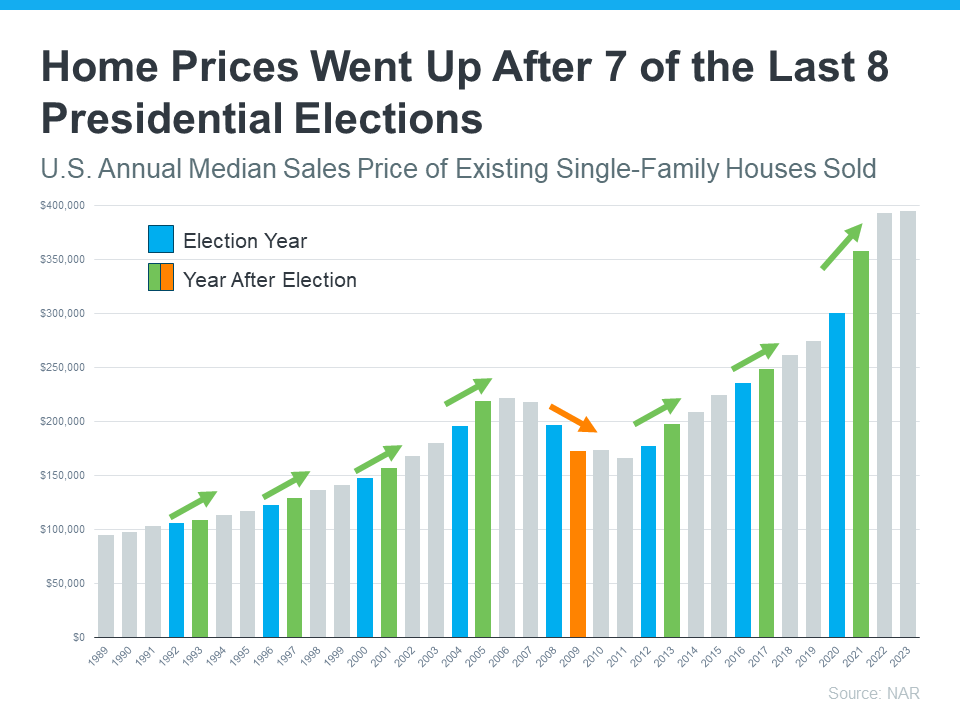
Similar to home sales, home prices have also demonstrated an upward trend during election years. The graph shows that home prices increased after 7 of the last 8 Presidential elections. This data indicates that elections generally don’t negatively impact home values in the long term.
While home prices have generally trended upwards over time, there have been periods of decline and stagnation, even during election years.
Mortgage Rates and Elections
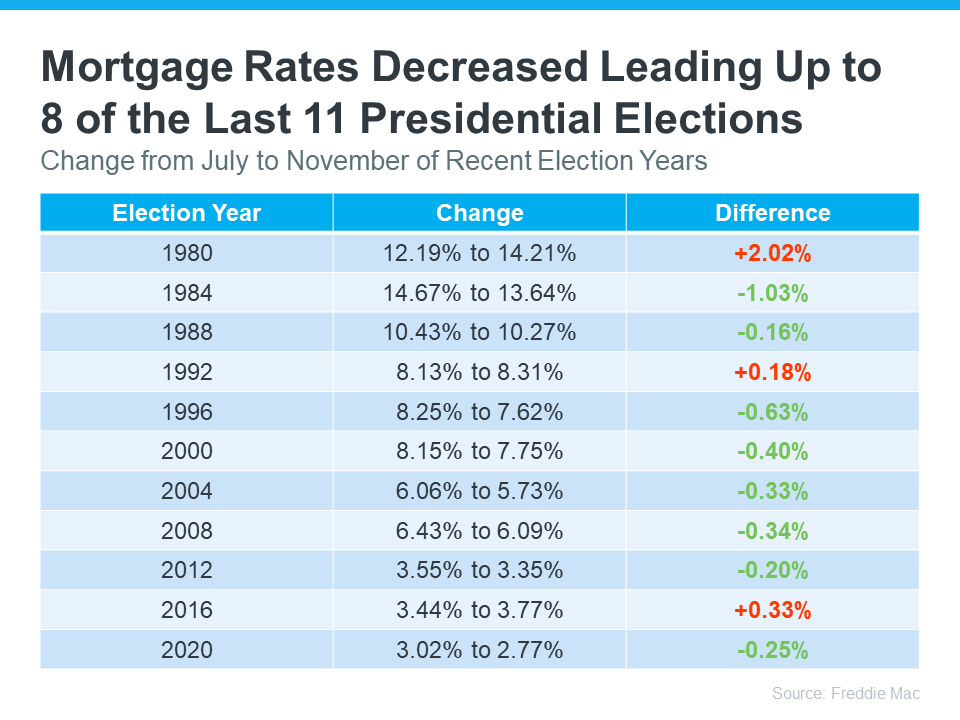
Mortgage rates play a crucial role in the housing market. Historically, mortgage rates have often decreased in the lead-up to Presidential elections. The table shows that rates dropped before 9 of the last 11 elections. This trend can benefit both buyers and sellers in the Sierra Vista market.
While mortgage rates have historically declined before some elections, this is not always the case. Economic conditions and Federal Reserve policies play a significant role in determining mortgage rates.
Tips for Sierra Vista Homebuyers
Stay informed
Monitor economic indicators and mortgage trends, but don’t focus solely on election outcomes
Get pre-approved
Understanding your budget helps you act decisively in the Sierra Vista market
Explore options
Consider various assistance programs and property types within your price range
Advice for Sierra Vista Home Sellers
Price competitively
Research recent local sales data to set a realistic price
Prepare your property
Make necessary repairs and stage your home effectively
Work with a professional
A Sierra Vista real estate agent like Derrick Coates can guide you through market fluctuations
What This Means for Sierra Vista Homeowners and Buyers
The key point to remember is this: While elections can introduce uncertainty, the historical data suggests that the housing market often remains stable or even improves during election years. Investors and buyers should focus on these fundamentals rather than short-term political events.
For most people looking to buy or sell homes in Sierra Vista, election outcomes rarely significantly alter their real estate plans.
Lisa Sturtevant, Chief Economist at Bright MLS, says:
“Historically, the housing market doesn’t tend to look very different in presidential election years compared to other years.”
Bottom Line
It’s normal to feel uncertain when an election is approaching, but the Sierra Vista housing market has consistently demonstrated resilience through various political cycles. If you’re considering a move in our local real estate market, don’t let election concerns unnecessarily delay your plans. Team Derrick Coates is here to provide accurate, up-to-date information and guide you through the Sierra Vista market, regardless of the political climate.
When selling a home, reaching the right buyers is crucial for securing a good deal, but For Sale By Owner (FSBO) sellers often face significant challenges in the market. This blog explores the hurdles that FSBO sellers in Arizona, particularly around Sierra Vista, encounter and highlights how partnering with a real estate agent, like Derrick Coates, can provide a substantial advantage.
Understanding FSBO Limitations
FSBO sellers choose to go it alone primarily to avoid real estate agent fees, but this saving can come at a high cost. The primary drawback for FSBO sellers is their limited marketing reach. Without the extensive networks that agents from Team Derrick Coates have, FSBO sellers struggle to get their property in front of a large, relevant audience.
Lack of Exposure
Real estate agents have access to multiple listing services (MLS), which are crucial for getting widespread exposure. MLS listings are not just comprehensive; they are syndicated across numerous real estate websites reaching thousands of potential buyers. Without this, FSBO properties often remain visible only to those who pass by or through limited online platforms, significantly narrowing their reach.
Ineffective Marketing Strategies
Effective marketing involves more than just listing a property online. It includes professional photos, home staging, and crafting compelling property descriptions. Real estate agents in Sierra Vista from Team Derrick Coates are skilled in these areas and understand what attracts buyers in this specific market. FSBO sellers, lacking this expertise, might not present their property in the best light, reducing interest and offers.
Pricing Pitfalls
Setting the right price is a delicate balance. Overpricing can lead to a stale listing, while underpricing leaves money on the table. Real estate agents have the tools and knowledge to analyze market trends and assess comparable sales, ensuring the property is priced accurately for the Sierra Vista market. FSBO sellers, however, often lack this data, leading to pricing decisions based on guesswork.
The Role of a Real Estate Agent
A real estate agent’s role extends beyond just marketing. They help navigate the entire selling process, from initial listing to closing the deal, ensuring that everything runs smoothly. This includes negotiation with buyers, handling paperwork, and complying with local real estate regulations, which can be complex and vary significantly from one area to another.
Access to Professional Networks
Agents from Team Derrick Coates have established relationships with other real estate professionals, including photographers, home inspectors, and contractors, who can enhance the appeal of your property. Their connections often include buyers’ agents in Arizona, who come with ready-to-act clients looking for homes like yours.
Negotiation Skills
Negotiations in real estate require knowledge and tact, especially in competitive markets like Sierra Vista. Agents bring experience and negotiation skills to the table, often achieving better sale terms and prices than an FSBO seller could on their own.
Legal and Regulatory Knowledge
Selling a home involves a significant amount of legal paperwork and adherence to regulatory standards. Mistakes here can be costly, risking fines or legal action. Real estate agents ensure compliance with all local laws, making the process much safer and more secure for sellers.
FAQs
Q: How much can I save by selling FSBO?
A: While you might save on agent’s commissions, typically around 5-6% of the sale price, you might end up selling your home for less due to inadequate exposure and pricing strategies. exposure or assistance as a real estate agent would.
Q: Can I use online services for FSBO selling?
A: Yes, there are online platforms that support FSBO sales, but they don’t provide the same level of service as a full-service real estate agent.
Q: How do I know if my pricing is right?
A: Real estate agents use detailed market analysis and comparable sales data to set prices. As an FSBO seller, you would need to access and interpret this data yourself, which can be challenging without the proper tools.
Q: Are there any specific challenges for selling a home in Sierra Vista?
A: Yes, like any localized market, Sierra Vista has its unique trends and buyer preferences. Local real estate agents understand these nuances and can target marketing efforts accordingly.
In conclusion, while FSBO selling might seem appealing from a financial standpoint, the challenges and potential losses can outweigh the benefits. Engaging a professional, especially in specialized markets like Sierra Vista or Arizona can transform the selling experience, ensuring you reach the right buyers and get the best possible outcome. Consider consulting with Team Derrick Coates to understand more about the advantages of working with an experienced real estate agent.
Buying a house in Arizona is not just about finding the right property. It’s about understanding and preparing for financial commitment. With its diverse landscapes, from the sprawling deserts to lush, green valleys, Arizona offers a unique backdrop for homeowners. Whether you’re eyeing a modern urban loft in Phoenix or a tranquil retreat in Flagstaff, the financial principles of purchasing a home remain consistent. Let’s break down the costs, preparations, and next steps in your journey to homeownership in Arizona.
1. Down Payment
The down payment stands as your initial investment in your home. A larger down payment can significantly reduce your borrowed amount, leading to lower monthly payments over the loan’s life. Lenders favor substantial down payments as they suggest a reduced risk of loan default.
How Much Is Enough?
Based on the information from Time’s article on the average down payment on a house in 2024, the average down payment for a home in Arizona is approximately 17% of the average home price in the state. With an average home price of $407,700 in Arizona, the average down payment would be around $69,309 based on the 17% down payment figure for repeat buyers. This data provides insight into the average down payment amount that homebuyers in Arizona may consider when purchasing a home. Home buyers in Arizona have the flexibility to choose from various mortgage options with lower down payments, such as some Fannie Mae and Freddie Mac conventional mortgage programs that require as little as 3% down, FHA loans with a 3.5% down payment for applicants with a minimum credit score of 580 but if your credit score is below 580, the down payment requirement is 10%. VA and USDA loans that offer the possibility of zero down payment. These options provide homebuyers in Arizona with the opportunity to make a down payment that aligns with their financial situation and eligibility criteria.
Building Your Down Payment Fund
Accumulating your down payment necessitates a strategic approach. Consider leveraging local first-time homebuyer programs for grants or loans. Reevaluate your spending to identify savings opportunities and invest your savings in high-yield accounts for better growth. Gifts from family members can also contribute to your down payment, provided you document that these are gifts, not loans.
2. Closing Costs: The Hidden Layer
The closing costs for home sellers typically range from 3.02% to 5.44% of the sale price. The average total closing cost for a home sale price between $300,000 and $400,000 is around $4,190.34. These costs include realtor fees, which can amount to $22,953 for the median home price in the state [1].
For buyers in Arizona, the closing costs after taxes for a property in the price range of $300,000 to $400,000 can be between $3,142.76 and $5,587.12. The average total closing cost in this range is approximately $4,190.34 [2].
Additionally, the loan origination fee, which is a significant component of a buyer’s closing costs, is typically expressed as a percentage of the loan amount, ranging from 1% to 3% in Arizona [3].
Other essential fees involved in closing costs in Arizona include real estate commissions (5% to 6% of the final sale price), recording fees (around $600 to $700), escrow fees, and home inspection costs (ranging from $400 to $600) [4].
Mitigating Closing Costs
While unavoidable, you can manage closing costs by rolling them into your loan or negotiating them in a buyer’s market. Some lenders offer no-closing-cost options, spreading these costs over the loan term, albeit at a higher overall expense.
3. Prepaid Costs and Earnest Money
Prepaid costs cover immediate expenses such as homeowners insurance, property taxes, and mortgage interest. Additionally, earnest money, typically about 1% of the home’s purchase price, secures your intent to buy, credited towards your purchase at closing.
4. Moving Costs
The logistical aspect of moving homes also bears costs, influenced by distance, home size, and whether storage is needed. Average moving costs can range from $884 to $8,000, depending on factors such as the size of the household, distance, and additional services required [1].
It is advisable to obtain personalized quotes from moving companies to get more accurate figures for your specific moving needs in Arizona.
5. Monthly Mortgage Payments
Understanding the monthly financial commitment of your mortgage is crucial. Mortgage payments are influenced by the loan amount, interest rate, and term. Shopping around for the best mortgage rate can significantly impact your monthly payments and overall loan cost. Mortgage insurance may also apply if your down payment is less than 20%.
6. Ongoing Homeownership Costs
Owning a home entails regular maintenance, insurance, property taxes, and possibly HOA fees. Homeowners in Arizona should budget approximately 1% of their home’s value annually for maintenance and repairs to ensure that they can cover ongoing homeownership costs effectively [1].
Preparing to Buy a Home in Arizona
1. Financial Health Check
Start by reviewing your credit score and financial history. Your credit score will significantly influence your mortgage interest rate. Aim for a score of 620 or higher for the best rates.
2. Budgeting Beyond the Mortgage
Ensure your budget accounts for all aspects of homeownership, including utilities, maintenance, and emergency repairs. A good rule of thumb is to allocate 1-3% of your home’s purchase price annually for maintenance.
3. Saving for Down Payment and Closing Costs
Open a savings account specifically for your home purchase. Consider automating transfers to steadily build your savings without it feeling like a burden.
4. Exploring Loan Options
Research the different types of mortgage loans available, including FHA, VA, USDA, and conventional loans. Each has unique benefits and requirements.
Next Steps: Journey to Homeownership
Get Pre-Approved for a Mortgage: This will give you a clear idea of what you can afford and strengthen your position as a buyer.
Find a Real Estate Agent: An agent like Derrick Coates can provide invaluable insight into the Arizona market and help you find homes that meet your criteria. Here is our blog about “Guide to Choosing a Real Estate Agent”
Start House Hunting: With your budget and preferences in mind, explore what Arizona has to offer.
Make an Offer: Once you find the perfect home, your agent will help you make a competitive offer.
Close on Your Home: After navigating inspections, appraisals, and finalizing your loan, you’ll close on your home and get the keys to your new Arizona journey.
A: While a higher credit score offers better loan terms, there are programs available for buyers with less-than-perfect credit. FHA loans, for example, require a minimum score of 580 for a 3.5% down payment.
Q: How long does the home-buying process take in Arizona?
A: On average, the process can take anywhere from 30 to 60 days from offer to closing, depending on various factors such as loan type and whether there are any contingencies.
Q: Are there any programs to assist first-time homebuyers in Arizona?
A: Yes, Arizona offers several programs to help first-time buyers, including down payment assistance and reduced interest rates. The Arizona Department of Housing’s website provides resources and information on these programs.
Q:What’s the best time of year to buy a house in Arizona?
A: The market tends to be more active in the spring and summer. However, buying during the off-season, like fall or winter, might offer less competition and potentially better deals.
Final thoughts
Purchasing a home in Arizona is a significant financial decision that requires careful planning and consideration. By understanding the costs involved, preparing your finances, and taking informed steps toward homeownership, you can navigate the process with confidence and ease. Welcome to the vibrant and diverse community of Arizona homeowners! If you are looking for a trusted team who can help you, Team Derrick Coates is your dedicated partner in buying a home in Arizona. With our expertise and personalized service, we guide you toward finding your dream home. Contact us now!
In the ever-evolving landscape of real estate, technology has become a game-changer, especially in vibrant markets like Arizona. With innovations ranging from virtual tours to artificial intelligence (AI) and blockchain, the way real estate agents, such as those at Team Derrick Coates in Sierra Vista, interact with properties and clients is transforming rapidly. With recent advancements in technology, these tours now offer a seamless, immersive experience that is reshaping the buying and selling landscape.
Virtual Tours: Expanding Horizons
Recent data indicates that approximately 22% of homes on the market utilize virtual tours, highlighting their growing importance (HBS Working Knowledge). These tours are not just a novelty but a necessity, especially in a market as competitive as Arizona’s. They provide prospective buyers, including those relocating from other states or countries, the convenience of exploring properties in detail from anywhere in the world.
The Impact on Buyers and Sellers
Virtual tours significantly enhance the property viewing experience. Studies show that 54% of buyers are unlikely to even consider a property unless it includes a virtual tour (PhotoUp). Moreover, properties sold with virtual tours tend to fetch approximately 9% more than those without, and listings with virtual tours close 31% quicker (PhotoUp). This efficiency is crucial in markets like Sierra Vista, where rapid decision-making can be a game-changer.
Efficiency and Professionalism
By incorporating virtual tours, real estate agents can reduce the time spent on viewings by about 40%, allowing them to manage their listings more effectively (Snappr). This technological approach not only saves time but also positions agents as more professional and in tune with modern buyers’ preferences, particularly among key demographics such as buyers aged 18 to 34, who are 130% more likely to schedule a showing if a virtual tour is available (PhotoUp).
Future Trends: VR and AR
Looking ahead, the integration of Virtual Reality (VR) and Augmented Reality (AR) in virtual tours is set to take the real estate experience to even greater heights. These technologies allow buyers to not only view properties remotely but also to visualize changes and renovations within a space, making it easier to see a house as a home. As VR and AR technologies become more affordable, their adoption is expected to increase, further enhancing the effectiveness of real estate marketing strategies (Realtyna – Real Estate Web).
FAQs on Technology in Real Estate
Q: How do virtual tours benefit out-of-state buyers interested in Arizona real estate?
A: Virtual tours provide a comprehensive, realistic view of properties, enabling out-of-state or international buyers to make informed decisions without the need to travel. This not only saves time and resources but also allows them to explore multiple properties quickly and efficiently. Research indicates that homes with virtual tours are preferred by a significant margin, with 54% of buyers unwilling to consider homes without them (PhotoUp).
Q: Can AI really predict real estate market trends?
A: Yes, AI has the capability to analyze large datasets to identify patterns and forecast market trends. This helps both buyers and agents make data-driven decisions. AI tools are becoming increasingly sophisticated, offering predictions on price trends, the best times to buy or sell, and identifying up-and-coming areas for investment (HBS Working Knowledge).
Q: Is blockchain technology safe for real estate transactions?
A: Blockchain technology is renowned for its security and transparency. It records every transaction on a decentralized and immutable ledger, making it nearly impossible to tamper with. This reduces the risks of fraud, speeds up transactions, and simplifies the verification of legal documents, providing a safer and more efficient transaction process for all parties involved (Welcome to Amres).
Q: Will technology replace real estate agents in Arizona?
A: While technology significantly enhances many aspects of real estate transactions, the personalized service and expertise of professional agents remain crucial. Technologies like virtual tours and AI support agents by making their services more efficient, but they do not replace the need for professional advice and human interaction, especially in nuanced markets like those in Arizona (Snappr).
Q: What should I look for in a tech-savvy real estate agent in Sierra Vista?
A: Look for agents who effectively utilize advanced technologies such as virtual tours, AI, and blockchain. Agents who embrace these tools are likely to be more efficient, well-informed, and capable of delivering tailored services that meet your specific needs. The use of these technologies not only reflects an agent’s commitment to providing the best service but also their ability to stay ahead in a competitive market (PhotoUp) (Welcome to Amres).
Final thoughts
As technology continues to evolve, the future of real estate looks promising, with innovations that make the buying and selling process more efficient and user-friendly. In Arizona, Team Derrick Coates is at the forefront of this transformation, ensuring that clients receive the most advanced and effective real estate services available.
In the sun-drenched state of Arizona, where the mercury often soars to eye-watering highs, keeping your home cool isn’t just a matter of comfort, it’s a necessity. However, the cost of running air conditioning units day and night can quickly add up, leaving many homeowners and real estate investors searching for effective ways to save on their cooling bills. Here are some tried and tested tips that not only promise to keep your home pleasantly cool but also ensure your wallet remains relatively unscathed.
1. Invest in Quality Insulation
One of the most effective ways to keep your home cool is to ensure its well-insulated. Quality insulation acts like a thermal barrier, keeping the scorching Arizona heat out and the cool air in. This is particularly crucial for real estate investors in Arizona, as properties with superior insulation often command higher market values and attract energy-conscious buyers.
2. Upgrade to Energy-Efficient Windows
Another key strategy is upgrading to energy-efficient windows. Double-pane windows with a low-emissivity (low-E) coating can significantly reduce the amount of heat entering your home. This upgrade not only helps save on cooling costs but also enhances the property’s appeal in Arizona’s competitive real estate market.
3. Use Smart Thermostats
Smart thermostats are a game-changer for managing your home’s cooling efficiency. These devices allow you to set schedules and automatically adjust the temperature based on your habits and preferences. For real estate investors, installing smart thermostats can be a selling point, showcasing the property’s modern amenities and commitment to energy efficiency.
4. Opt for Shade Solutions
Implementing shade solutions such as planting trees, installing awnings, or using solar screens on windows can dramatically reduce the heat entering your home. Not only do these solutions contribute to lower cooling bills, but they also enhance the property’s curb appeal, an essential factor in Arizona’s real estate scene.
5. Regular Maintenance of Cooling Systems
Ensuring your air conditioning unit is regularly serviced and maintained can lead to significant savings. A well-maintained unit operates more efficiently, uses less energy, and has a longer lifespan, factors that resonate well with both homeowners and real estate professionals in Arizona.
6. Consider Alternative Cooling Methods
Exploring alternative cooling methods, such as evaporative coolers (also known as swamp coolers), can be particularly effective in Arizona’s dry climate. These systems use less electricity than traditional air conditioners and can be a cost-effective solution for cooling. For those in the real estate market, offering a home with an alternative, eco-friendly cooling system can be a unique selling proposition.
Conclusion
Saving on cooling bills in Arizona requires a multifaceted approach that combines energy efficiency, smart technology, and some traditional methods of keeping the heat at bay. For homeowners and real estate investors alike, implementing these strategies not only promises a cooler, more comfortable living environment but also contributes to the property’s overall value and appeal in the bustling Arizona real estate market.
Remember, investing in your home’s cooling efficiency is not just about immediate savings, it’s about enhancing the property’s long-term value and appeal in one of the most vibrant real estate markets in the country.
Don’t let summer cooling bills blow a hole in your budget. Connect with Derrick Coates today or call us at 520-456-4554 to arrange a consultation with Derrick Coates. Let him assist you in discovering the optimal solutions to maximize your cooling system’s efficiency while maintaining control over your expenses.
Navigating the Arizona Real Estate Market for Sellers
Selling your home in Arizona can be a lucrative venture if approached with the right strategy. In this guide, we will explore proven methods to ensure a quick and profitable sale, incorporating key aspects such as the best time to sell a house in Arizona, essential real estate tips for selling in Arizona, and a comprehensive Arizona property selling guide.
Understanding the Arizona Property Market
The Arizona real estate market is as diverse as it is dynamic. Knowing the ins and outs of your local market is crucial. Factors such as the economic climate, seasonal trends, and local demand play a significant role in determining the best strategies for selling your property.
Best Time to Sell a House in Arizona
Timing your sales can significantly impact the profitability of the transaction. Research has shown that the best time to sell a house in Arizona tends to be during the spring and early summer months when buyer activity is at its peak. However, this can vary depending on specific market conditions and locations within the state.
Real Estate Tips for Selling in Arizona
To maximize your chances of a successful sale in the Arizona real estate market, consider the following tips:
Price It Right: Conduct a comparative market analysis or consult with a local real estate agent to set a competitive price.
Stage Your Home: Present your home in the best light. Staging can help potential buyers envision themselves living in the space.
Market Effectively: Utilize online listings, social media, and professional photography to showcase your property.
Be Prepared for Negotiations: Understand the art of negotiation and be prepared to make compromises to close the deal.
Understand the Legalities: Ensure all legal aspects, including disclosures and contract terms, are in order.
Connect with Team Derrick Coates for Expert Selling Assistance
Considering selling your home in Arizona? Connect with Team Derrick Coates for a seamless and successful real estate experience. Our team of experts specializes in the Arizona market and is dedicated to achieving the best outcome for your property sale. From market analysis to closing the deal, Team Derrick Coates is here to guide you through every step of the process. Contact us today to start your journey toward a profitable home sale.
Frequently Asked Questions
Q: What is the most important factor in selling my home quickly in Arizona?
A: Pricing your home correctly is crucial. A competitive price attracts more potential buyers and can lead to a quicker sale.
Q: How can I increase my home’s appeal to buyers?
A: Staging your home effectively and making necessary repairs can significantly enhance its appeal. This includes decluttering, cleaning, and possibly updating certain features.
Q: Should I hire a real estate agent to sell my home in Arizona?
A: Yes, working with a real estate agent like Derrick Coates who understands the Arizona market can be extremely beneficial. They can provide market insights, assist with pricing, marketing, negotiations, and handle legal paperwork.
Q: How long does it typically take to sell a house in Arizona?
A: The time frame can vary depending on market conditions, pricing, and the appeal of the property. However, with the right strategy, homes in Arizona can often sell within a few months.
Q: Are there any specific legal requirements for selling a home in Arizona?
A: Yes, Arizona has specific legal requirements, including property disclosures and contract regulations. It’s advisable to consult with a real estate professional or legal expert to ensure compliance.
Q: How does the season affect home sales in Arizona?
A: Seasonal trends can impact buyer behavior. Spring and early summer are traditionally active times for the real estate market in Arizona, but these trends can shift with market conditions.
Final Thoughts
Selling your home in Arizona requires a blend of market knowledge, strategic pricing, effective marketing, and negotiation skills. By following these strategies and staying informed about the local real estate market, you can achieve a quick and profitable sale. For a detailed exploration of these tips, refer to this comprehensive article on Arizona real estate selling strategies.
In the ever-evolving world of interior design, staying ahead of the trends ensures your space is not only stylish but also enhances the value and appeal of your home. For homeowners in Arizona, where the aesthetics of a home can significantly impact its marketability, understanding these trends is particularly crucial. Whether you’re planning to redecorate your own space or preparing a property for sale with a top real estate agent like Team Derrick Coates in Sierra Vista, knowing what’s in and what’s out can make all the difference.
Embracing the New: What’s Hot in Interior Design
1. Natural Elements
2024 sees a strong shift towards organic materials that bring the outdoors inside. Think natural stone countertops, bamboo flooring, and furniture incorporating rattan or wicker. These materials are not only eco-friendly but also add a warm, inviting layer to any space. For those in the sunny locales of Arizona, incorporating elements like local cacti as interior decor can provide a unique local touch that appeals to buyers.
2. Earth Tones and Warm Neutrals
Gone are the days of stark, cold interiors. This year, it’s all about warmth. Creamy whites, soft beiges, and subdued earth tones dominate the color palette. These colors work wonderfully in Arizona homes, reflecting the state’s natural desert landscapes and bright sunshine, enhancing the airy and bright feel of interiors.
3. Multi-functional Spaces
As remote work becomes a staple, homes are adapting. Multi-functional furniture and spaces are essential. Think convertible desks, foldable chairs, and room dividers that help maximize space utility. This trend is particularly important for real estate agents in Sierra Vista to highlight, as it appeals to the growing demographic of home buyers looking for a versatile living space.
4. Sustainable Choices
Sustainability is more than a buzzword; it’s a lifestyle, especially in interior design. From upcycled furniture to low-VOC paints, the choices are expanding. Homes that highlight these sustainable practices are not only trendy but are also seen as more valuable, something that Team Derrick Coates, a real estate agent in Sierra Vista, often emphasizes to potential buyers.
5. Bold Wallpaper
Wallpapers are back with a bang! Whether it’s a floral pattern, geometric shapes, or abstract designs, wallpaper is a perfect way to inject personality into a room. They create focal points and transform spaces without the need for extensive renovations.
Steering Clear: What’s Not
1. Industrial Elements
While once popular, the industrial design with stark metals and exposed structures is declining. The trend may not provide the warmth and comfort that homes in Arizona should aim to offer, especially given the state’s predominantly sunny climate.
2. Minimalism
The bare, minimalist look is being replaced by layered, more curated aesthetics that feel more personalized and homier. This doesn’t mean clutter; rather, it’s about choosing pieces that tell a story or add character.
3. Single-Use Spaces
Gone are the days of rooms designated for only one purpose. Today’s home buyers are attracted to flexible spaces that can easily transition from a home office to a guest room, or from a dining area to a craft space.
4. Fast Furniture
The trend of buying inexpensive, low-quality furniture is declining as consumers become more conscious of their environmental impact and seek durable, long-lasting items. This is especially true in the real estate market, where the quality of furnishings can reflect on the property’s overall appeal.
FAQ
How can I incorporate these trends if I’m selling my home?
Start with neutral tones and natural elements; these are universally appealing and can significantly boost your home’s attractiveness to potential buyers. Consult with a real estate expert like Team Derrick Coates to understand what specific trends might appeal to buyers in Sierra Vista.
What’s the most cost-effective trend to implement?
Sustainable upgrades, such as switching to LED lighting and investing in good insulation, are not only trendy but offer long-term savings. They can be great selling points that Team Derrick Coates can highlight.
Are bold wallpapers a risk for selling a home?
While bold wallpapers can personalize a space, they can also be polarizing. If you choose to use wallpaper, consider neutral patterns or limit bold prints to a single accent wall. This can be an exciting feature without overwhelming potential buyers.
Final thoughts
By staying informed about what’s hot and what’s not in interior design, and wisely choosing upgrades that enhance both the aesthetics and functionality of your home, you can significantly influence how quickly and profitably you can sell your home in Arizona. Team Derrick Coates in Sierra Vista can guide you through this process, ensuring that your home stands out in the real estate market.